Sunday, November 6, 2016

Arizona Trail: Passage 1


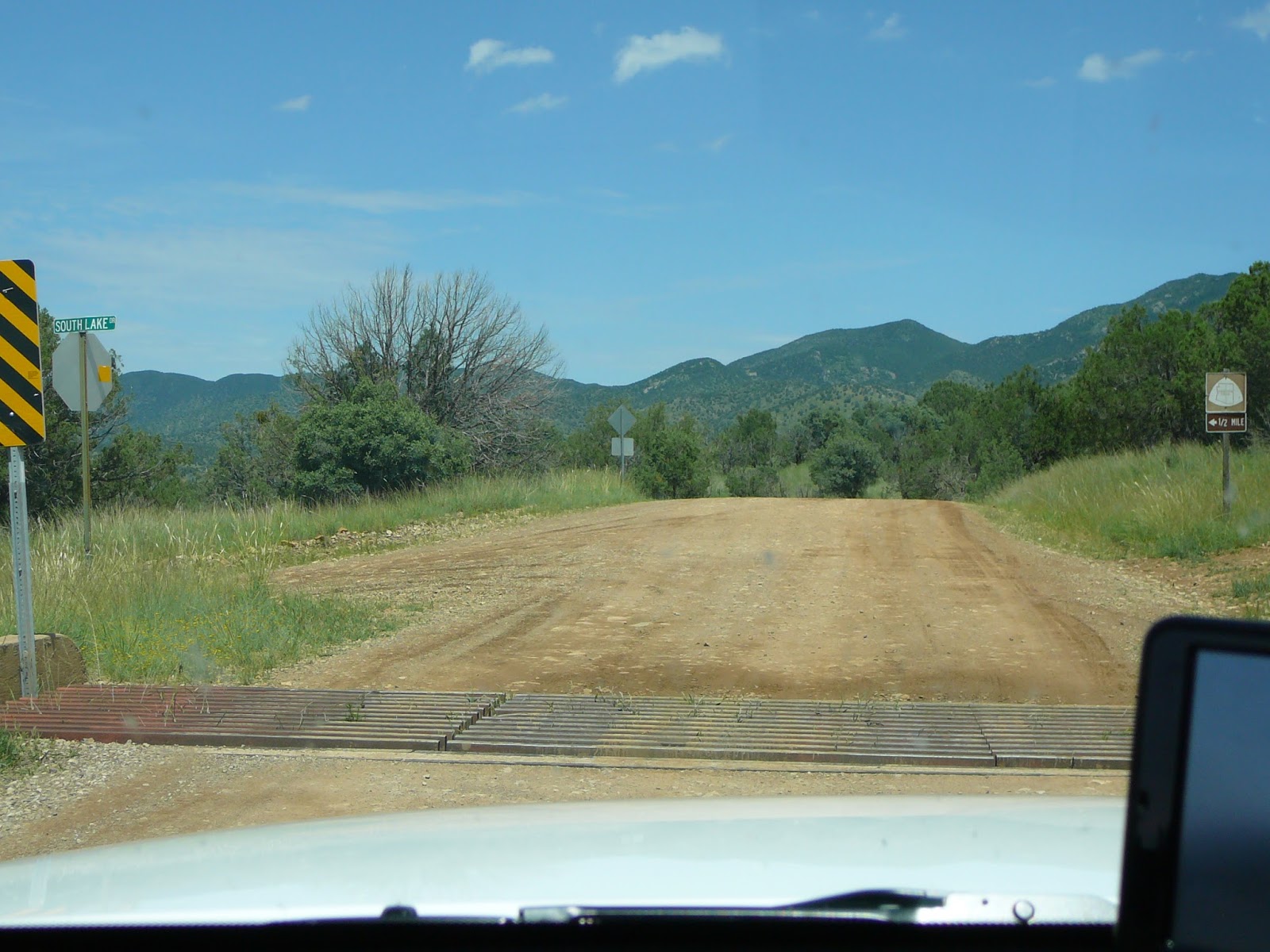
Here it is, passage 1.  I'm hiking down the trail from the roadside overlook, toward the Coronado Monument on the border.  Of course I don't get there.

This is the beginning of a series that I intend to finish by chronicling all my encounters with the Arizona Trail.  I've decided to go in passage order, for the passages I've visited.  Some, like this one, I've only sampled by driving through by car and stopping.  This stop was on September 1 or 2, 2013, as Chris and I returned from a wine-tasting weekend around Sonoita.  I had decided to take the border-paralleling highway East Montezuma Canyon Road, and we stopped at the overlook.  Though we didn't actually do much hiking, we stopped at a number of trailheads on our way back through Patagonia (Patagonia Lake, and Patagonia itself).  As I explore more fully, I'll enter more.

Sunday, February 28, 2016

Mesa Canals 14: Consolidated Canal to Coffee at Bergies in Gilbert


I can't believe that it's taken me almost two weeks to write this down:  I'll put it down to the flu (apparently, Arizona's the nationwide epicenter this week).  I also can't believe that this is the first Mesa Canals post in almost a year.

Anyhow, this is a great trip that I realize I haven't documented anywhere in this series, though it does intersect with Mesa Canals 10:  the Sun Circle Route for the last westbound mile.

First, this is the Consolidated Canal, which runs northwest to southeast roughly paralleling Gilbert Road.  I'd ridden this canal route before it was paved, and before the installation of traffic lights at most of the major street intersections.  Before these improvements it was iffy, and now it's approximately 8 miles of ease between 8th Street/Adobe and Bergies Coffee on Gilbert Road in downtown.  Almost the whole of the distance is paved, and almost all of the major intersections have special bike-pedestrian lights.  The two that don't (on the southern end of the route) are a little concerning, but can be used with care.

It was also a great morning, though it turned out to be unseasonably cold (probably the last time anyone will say that this year, though here's hoping).  It was a post-race warm down for Monster Media rider Beth Everhart, her Fasturdays and life partner Steve Cullen, cousin Yancy Everhart, friend Adam Burleson and me.  The East-coasters turned out to be more thin-blooded than one might think, but the sun was warm and the coffee was great!

P.S.  Beth took 3rd in the Senior Women Valley of the Sun Stage Race GC!

Saturday, January 2, 2016

2015: Reflection

Here I am again, at the beginning of the new year, expecting to go back to work on Monday, January 4.  Again, as usual, the holidays got away from me (maybe a bit more than usual) and I'm posting this as a substitute for a normal Christmas card, for those who care.  It's also nice to reflect on the things that made me thankful most last year.  Here are some highlights:

We began last year with the family at home, celebrating a just-completed kitchen remodel.

We've enjoyed this remodel ever since, especially since it brings to an end all the major things we had to do on the house.  Now, we've got a resort backyard and a remodel of the interior that's done in all major aspects.

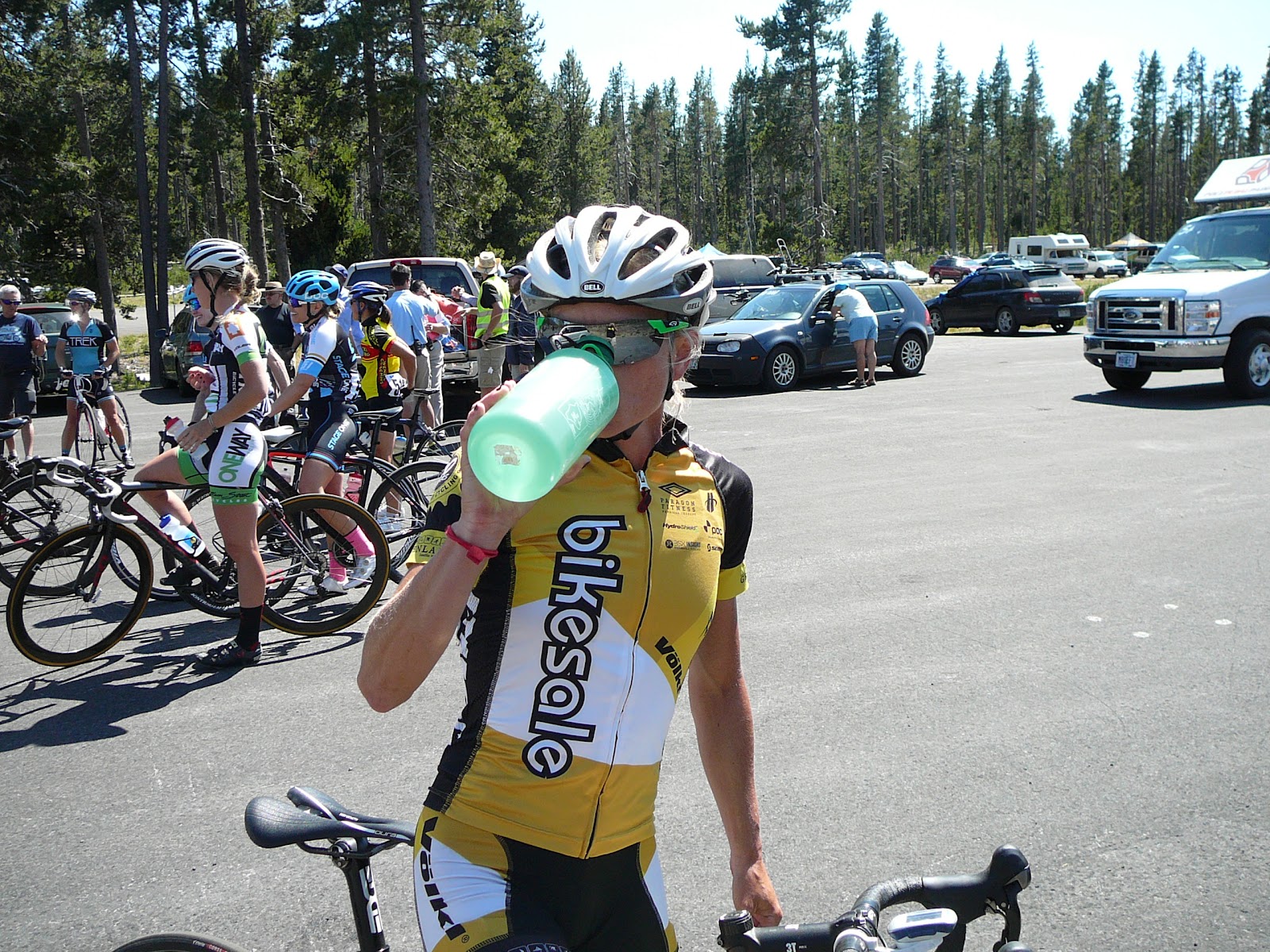
During the summer, I had the special opportunity to hang with Beth at the Cascade Classic, based in Bend, OR, in which she competed.  I helped with driving, fetching, and some lifting, but it was great to just be with her for a few days before driving down to pick up Steve in San Francisco, and down to Redondo Beach to see Nate and Tana, a few days before her (Tana's) delivery (oops, spoiler alert!).

Oh, just as a footnote, on our way back we stopped at Crater lake.  Very scenic.

OK, the big thing--I'M A GRANDFATHER!  (I've even got the Grandfather t-shirt--looks like the Godfather poster)

Otherwise, work continues to be a process of change, and I remain very busy.  Grand Canyon University is not recognizable as the small failing school of 10 years ago--we now have 15,000 students on campus, and several new buildings going up as I write.

So, many things to be thankful for, including my purchase of a new bicycle:  titanium, with top-of-the-line componentry.  It has certainly energized me to exercise more, though I did not reach my stated goal of "160 by 60."  (That is, be down to 160 pounds by age 60, which I turned in October.)  I'm also thankful for the continuing trip tradition with Richard and Maxie:  we've transitioned to static camping at trailheads and doing day hikes from there.  This last year was the Eastern Superstitions, near Globe.  We camped at the Miles Ranch trailhead, and fanned out on the several trails that left from that point, over three days.


Our fall has been taken up with trips to California to see the grandbaby; we've just gotten back from Redondo Beach over Christmas, where 4-month-old Emma has enthralled the grandparents with enjoying reading and singing!

This is definitely a year to count blessings:  new life, continuing happiness with those we love, the place we live (both small-scale--home, and large-scale--the state and country).


Friday, May 8, 2015

Mesa Canals 13 (more info on Mesa Canals 4)

Waaay back in Mesa Canals 4, I rode the Eastern Canal from where it crosses Gilbert Road to where it crosses University Avenue.  At the time, I was interested in distance, but when I rode it yesterday, I discovered a little nugget, on the west bank of the canal south of 8th Street/Adobe.  Easily reachable from the canal path, just north of an apartment complex is a small park, with synthetic climbing rocks.  It's just big enough for smaller folks, and not too hard to climb (unless you're wearing cleated shoes).  Right, see my detail map to the park in Google earth, and, below, a picture of the climbing rocks themselves.  Kudos to the city for this park!

Sunday, April 5, 2015

Mesa Canals 12: to the New Desert Trails Mountain Bike Park


On this Easter morning, after going to a sunrise service near Usery Mountain Park, I took the mountain bike out (at long last) just to ride for a while.  On the way back from the service, we had passed the new Desert Trails Mountain Bike Park at McDowell and Recker (NE corner).  So I decided to pedal out.

What a wonderful morning:  clear and 85 degrees, mountains in the distance, some wind out of the south, but not overwhelming.  I rode out on the route to Granite Reef Dam (Mesa Canals 7) to where the canal crosses the Salt River Sand and Gravel road (which becomes Thomas Road).  It's probably good to ride this on a day when there's no business traffic.  At Higley, I turned south, then went around past the Longbow Golf Course to Recker, then south on Recker to the park.

It's a decently-designed park, with a 3/4 mile perimeter trail, plus a number of BMX-style courses (some, suitable for kids).  There are apparently some trails over the hill:  the east side is for climbing, and the west side is for descending (apparently with one-way traffic).  I just tried the perimeter trails.  The only possible problem I see is that two of the downhill trails empty into the perimeter trail on the west side.  But it's very scenic, and it's great that the city has designed this relatively pristine parcel so well.

Sunday, June 29, 2014

Cycling Books for Father's Day (1)

My daughter and her boyfriend (both competitive cyclists) bought me two books for Father's Day:  Pro Cycling on $10 a Day (Phil Gaimon) (PCO$10), and Land of Second Chances:  The impossible rise of Rwanda's cycling team (Tim Lewis) (LSC).  Both are great reads, and both raise some interesting questions.  (I noticed that this is getting long, so I'll just talk about Gaimon here and save LSC for later.)

Gaimon's memoir is alternately funny and inspiring, in a post-modern sort of way:  got to love the grossness and obscenity of some of the stuff that goes on among the riders in practice, races, and training, and it's interesting to see Gaimon work through his emotions about the injustices that necessarily attend when someone is pursuing a labor of love in the context of a money-making sports environment. (Of course, ultimately he is on the cusp of getting what he set out to accomplish.  Uplifting.)

But it's most interesting to see a young one with postmodern ethics attempting to navigate the moral ambiguities of the cycling scene.  Gaimon has one ethical principle that comes to the fore:  ride clean (of performance-enhancing drugs (PEDs)).  So, we get a lot of Lance lancing (don't read this book, Armstrong, it'll make you mad).  Lance is Satan.  I understand this issue, to a point:  certainly the sport of cycling has lost much of its popularity in the U.S. thanks to this, and, to be honest, for me it's not so much Lance's actual drug use (I'm willing to give him a pass to an extent on it anyway; EPO was a survival tool during his treatment).  Instead, it's the bullying, the stonewalling, the abandonment of friends and subordinates, and the cultivated cult of personality that are ultimately the most off-putting, for me personally.  Lance's (can I say tragic? Professionally fatal?) flaw (and he has been capable of great good with the Livestrong foundation) was thus interpersonal and not behavioral.

But what Phil focuses on is the drugging.  I understand this, I understand the soap tattoo, I understand the problems of being an effective teetotaler in the company of the addicted.  And he HATES the hypocrisy of the main user pontificating self-righteously.  I get it--hypocrisy is the worst.

Phil is an example of the uniquely American moralist; American moralists run the gamut from social liberals to conservatives (and have, through American history), some tied to traditional religion, some not.  The Puritans get a bad rap, but primarily because we don't believe in the specific moral principles that they are aggressively forwarding.  But their primary moral characteristics, collectively--censoriousness and legal perfectionism--are mirrored in the discussion of almost every social issue of the last two hundred years in the nation.

This is an accident of history:  it so happens that we had a supreme and heinous evil woven into the fabric of the nation before nationhood--slavery.  That monstrous evil was fought from a moral perspective by Abolitionists of all stripes, who all tied themselves to this principle: that slavery is wrong and must be abolished.  Their methods differed:  Harriet Beecher Stowe wrote a book, Thoreau wrote an essay, harbored fugitive slaves, and spent a night in jail, John Brown attacked Harper's Ferry and was hanged.  That was the great moral principle that divided the nation, and led to 620,000 soldier casualties, besides the unrecorded number of slaves and civilians who died in the war and the centuries of slavery.  Rightly, it is a watershed moral issue, and those on the wrong side of it were (and are) vilified as monsters or despicable.

Of course, we did that with alcohol too (Prohibition), and women's suffrage, and civil rights, and gay marriage, and drugs, and speech, and names, and feminism, and smoking, and global warming (climate change?) . . . and the list goes on.  Feel free to add your own items.  One might be forgiven for thinking that some of these causes are more important than others.

But in every case, there's what I guess I'll call the rhetoric of censoriousness and dismissal.  Just think about how people talk about smokers and tobacco companies, and you get my point.  (It is, of course, the unpardonable sin [registering irony here; I have smoked a bit myself]).

Oops.  Anyhow, back to Phil:  he spends most of the book in the moralist position, but at the end is forced to confront the fact that those who were fighting alongside him on the PED issue were themselves often implicated in PED use.  I would say (as Greg Lemond has said, I think) that it was impossible to remain at the top levels of cycling any time between the mid 1980s and pretty much 2013, and not be involved in the doping scandal somehow.  I applaud Gaimon for his final reflection on the issue.

But I'm old; I was inspired by Lemond, and by Jock Boyer, Lon Haldeman, Susan Notorangelo, and others in the '80s.  I've seen a lot of ups and downs.  But that's grist for my next review.

Monday, May 19, 2014

Whoa, almost a year, really??


I looked at the date on my last blog entry and realized that it's been almost a year since I last posted.  Admittedly, I've done relatively little on the Mesa Canals lately, though I rode in the Ride the Vortex Arizona MS Society 150 ride last weekend.  It was a good ride for me, with a metric century, then a 30-mile distance over the two days.  The event was marred by a fatality on Saturday, however.  I did not find out until Saturday evening, because I did not ride that part of the course, though I have ridden that road in previous years.  The Society did not put out specific information, so I won't either, though this has been reported in news outlets.

I've also been catching up on my reading during the last two weeks out of school.  I decided on a whim to re-read Ed Abbey's Monkeywrench Gang (MG); the introduction to the edition talked about it as one of the great social issue novels of the U.S., comparing it to Uncle Tom's Cabin (UTC) and The Jungle.  Having read UTC, I can now categorically state that MG is the better-written novel by far; many of the Southwestern wilderness descriptions are positively lyrical, and as I re-read it, I also notice the classic satiric construction--there are no heroes without serious flaws in this book, and it's the case that nothing changes for the better on this issue in the book, either.  Hmmm, too much like real life?

So, why did I resonate so much more with the book this time?  (This isn't to say that I didn't resonate with the book before, given my love of the wilderness.)  But this time I personally knew the landscape Abbey was describing, having backpacked, hiked, and explored the Arizona desert for 22 years now.  When I read it first, I was living in Michigan, and the environmental degradation issues were of a different order.  It's also hard to find Western-scale wilderness anywhere east of, say Kansas and Nebraska.

Plus, now, I'm old, tired, and jaded (a regular Doc Sarvis), so the satiric structure seemed more appropriate.